
Top 5 Denial Categories Costing Healthcare Organizations Millions
Authorization, eligibility, medical necessity, billing errors, and timely filing denials continue to be among the largest drivers of lost revenue across healthcare organizations.

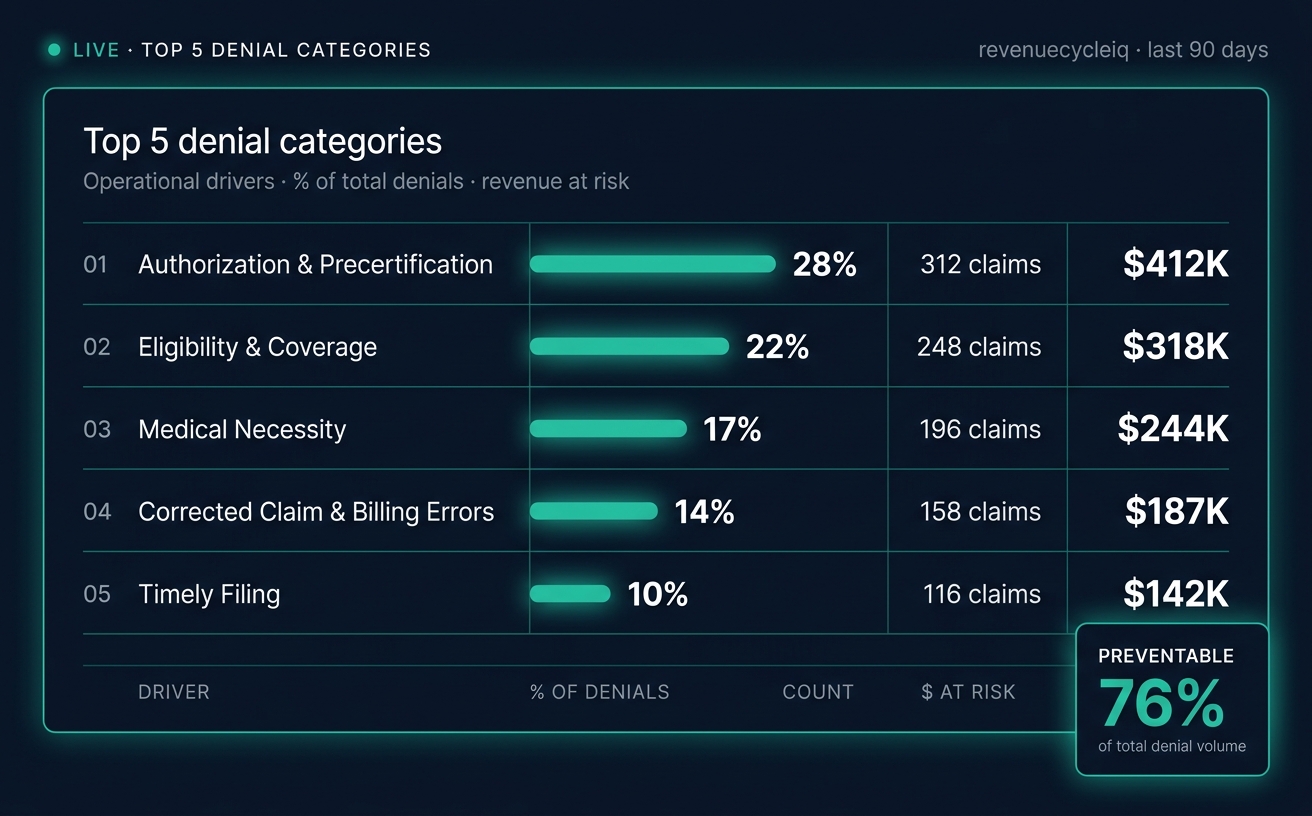
- A small set of denial categories drives most preventable write-offs.
- Authorization, medical necessity, and COB issues remain the top three across most service lines.
- Daily workflow ownership matters more than denial-fighting heroics.
Why Denial Prevention Should Be a Top Executive Priority
Every denied claim represents delayed cash flow, increased labor costs, and lost revenue opportunities. While many healthcare organizations focus heavily on collections and accounts receivable, denial prevention often offers the greatest opportunity for financial improvement.
Industry studies estimate that a significant percentage of denials are preventable, yet many organizations continue to dedicate substantial resources to rework, appeals, and manual follow-up processes.
The most successful revenue cycle organizations focus on identifying denial trends, correcting root causes, and implementing proactive workflows that prevent denials before claims are submitted.
Below are five of the most common denial categories impacting healthcare organizations today.
1. Authorization and Precertification Denials
Why It Happens
Authorization denials occur when required approvals are not obtained before services are rendered or when approved services do not match what was ultimately billed.
Common causes include:
- Missing prior authorization
- Expired authorization
- Incorrect authorization units
- Authorization not updated after treatment changes
- Services provided outside approved date ranges
Financial Impact
Authorization denials frequently represent some of the highest dollar-value denials because they often involve intensive treatment programs, surgeries, specialty care, or extended services.
Prevention Strategies
✔ Automated authorization tracking
✔ Daily authorization work queues
✔ Real-time communication between clinical and revenue cycle teams
✔ Pre-bill authorization validation
2. Eligibility and Coverage Denials
Why It Happens
Eligibility denials occur when insurance coverage cannot be verified or when coverage has changed prior to service.
Common causes include:
- Inactive insurance
- Incorrect member ID
- Coverage termination
- Incorrect plan information
- Coordination of benefits issues
Financial Impact
These denials often create significant delays in reimbursement and can increase patient responsibility balances.
Prevention Strategies
✔ Eligibility verification before admission
✔ Eligibility re-verification prior to claim submission
✔ Automated insurance discovery tools
✔ Coordination of benefits verification
3. Medical Necessity Denials
Why It Happens
Medical necessity denials occur when payors determine that services do not meet their clinical criteria for coverage.
Common causes include:
- Insufficient documentation
- Missing clinical support
- Failure to meet payor guidelines
- Missing assessments
- Incomplete treatment plans
Financial Impact
These denials often require extensive appeal efforts involving both clinical and revenue cycle teams.
Prevention Strategies
✔ Strong clinical documentation programs
✔ Regular medical necessity audits
✔ Payor-specific documentation requirements
✔ Ongoing provider education
4. Corrected Claim and Billing Errors
Why It Happens
Many denials are generated simply because claims are submitted incorrectly.
Common causes include:
- Incorrect modifiers
- Missing modifiers
- Invalid coding combinations
- Duplicate claims
- Incorrect billing provider information
- Revenue code errors
Financial Impact
While individual claims may be corrected relatively quickly, high volumes of billing errors create significant administrative burden and increase days in accounts receivable.
Prevention Strategies
✔ Front-end claim edits
✔ Claim scrubber technology
✔ Coding audits
✔ Standardized billing workflows
✔ Clearinghouse rejection monitoring
5. Timely Filing Denials
Why It Happens
Timely filing denials occur when claims are submitted after the payor's filing deadline.
Common causes include:
- Charge lag
- Missing documentation
- Manual workflow delays
- Staffing shortages
- Delayed claim corrections
Financial Impact
Timely filing denials are among the most costly because many become non-recoverable, resulting in permanent revenue loss.
Prevention Strategies
✔ Monitor charge lag daily
✔ Automated work queues
✔ Timely filing dashboards
✔ Escalation processes for aging unbilled accounts
Executive Takeaway
Most organizations focus on working denials after they occur. High-performing revenue cycle teams focus on preventing them altogether.
Organizations that consistently monitor denial trends, implement strong front-end controls, leverage automation, and improve visibility into root causes can significantly reduce preventable denials while improving cash flow and operational efficiency.
The goal is not simply to work denials faster—it is to create processes that prevent denials from occurring in the first place.
Questions Every Revenue Cycle Leader Should Be Asking
- What are our top denial categories?
- Which denials are truly preventable?
- How much revenue is currently tied up in denials?
- What are the root causes driving denial volume?
- Which denial trends require executive attention?
Understanding the answers to these questions is often the first step toward recovering millions in lost revenue and improving overall revenue cycle performance.
Stay Ahead of Revenue Cycle Trends
Subscribe to receive executive insights, industry trends, revenue cycle strategies, KPI guidance, denial management best practices, and AI innovations delivered directly to your inbox.
Ready to Improve Revenue Cycle Performance?
Explore Revenue Cycle IQ's consulting services, analytics solutions, and executive intelligence tools designed to help healthcare organizations improve financial outcomes.