
Clean Claim Rate vs. First Pass Resolution: Understanding the Difference
Two metrics. Two very different stories. Clean Claim Rate measures how claims leave the organization. First Pass Resolution measures how they get paid. Knowing the difference is essential for improving reimbursement.

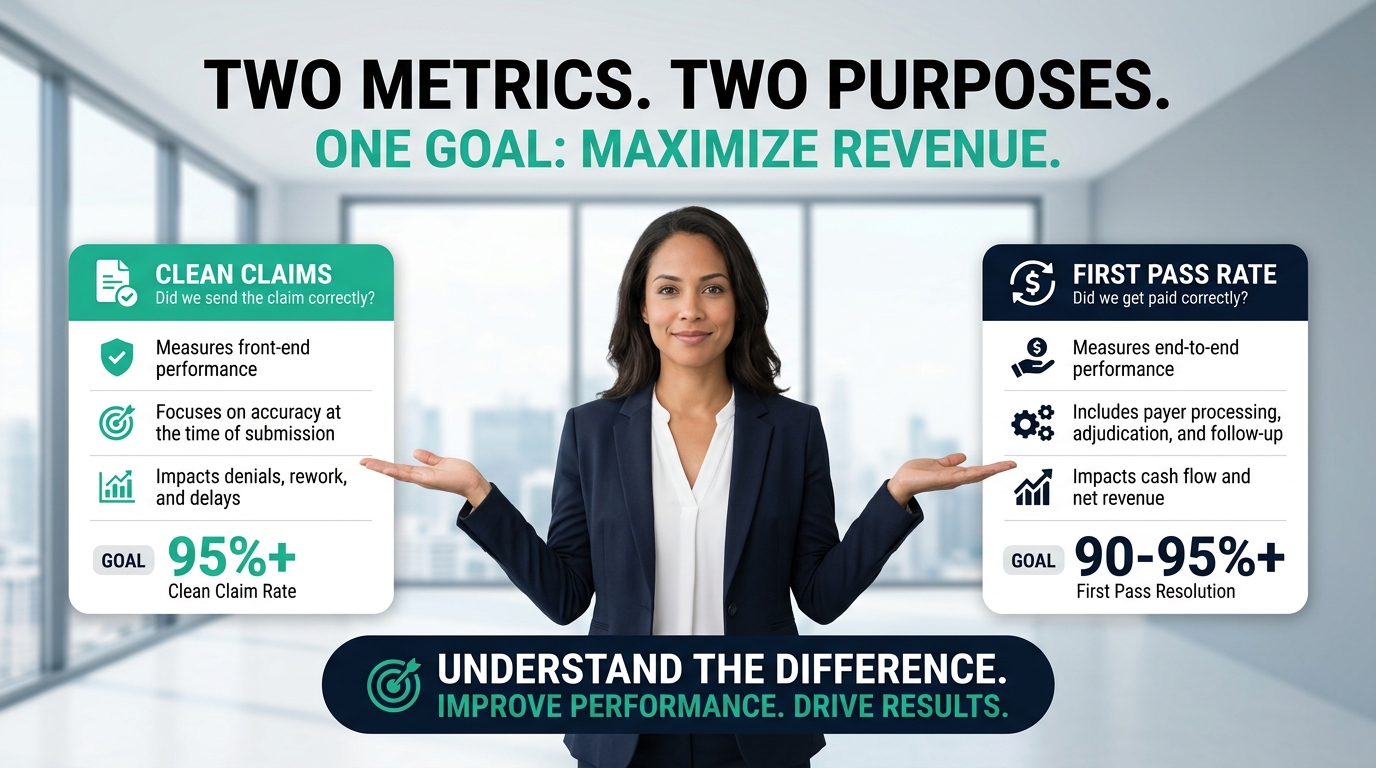
- Clean claim rate measures front-end edits. First pass resolution measures payor behavior.
- Both should be tracked. Conflating them hides the real bottleneck.
- A high clean claim rate with a low first pass rate means the problem is on the payor side.
Two Metrics. Two Very Different Stories.
Many healthcare organizations use the terms Clean Claim Rate and First Pass Resolution interchangeably.
The problem is they measure completely different parts of the revenue cycle.
When organizations fail to distinguish between the two, they often struggle to identify where breakdowns are occurring and which teams are responsible for improvement.
One metric measures the effectiveness of front-end processes.
The other measures the effectiveness of the entire revenue cycle.
Understanding the difference is essential for improving reimbursement, reducing denials, and increasing cash flow.
What Is Clean Claim Rate?
Clean Claim Rate measures the percentage of claims submitted without errors, omissions, or issues that would prevent processing.
In simple terms:
Did we send the claim correctly the first time?
A clean claim contains all required information and passes payor and clearinghouse edits without needing correction.
Examples of Issues That Impact Clean Claim Rate
- Missing authorizations
- Invalid subscriber information
- Incorrect member ID numbers
- Missing modifiers
- Invalid diagnosis codes
- Missing provider information
- Coordination of benefits issues
- Registration errors
Formula
Clean Claim Rate = (Number of Clean Claims Submitted ÷ Total Claims Submitted) × 100
Typical Benchmark
- Target: Greater than 95%
- Best-in-class organizations often exceed 97%
What Clean Claim Rate Tells Leadership
A low Clean Claim Rate typically points to front-end process failures involving:
- Patient access
- Registration
- Eligibility verification
- Authorizations
- Coding
- Charge capture
- Claim edits
In other words, Clean Claim Rate helps identify whether claims are being built correctly before submission.
What Is First Pass Resolution?
First Pass Resolution measures the percentage of claims paid correctly without requiring additional follow-up, appeals, corrections, or rework.
In simple terms:
Did we get paid the first time?
Unlike Clean Claim Rate, First Pass Resolution evaluates the entire reimbursement process.
Examples That Impact First Pass Resolution
- Denials
- Medical necessity issues
- Authorization denials
- Documentation requests
- Underpayments
- Corrected claims
- Appeals
- Payor processing issues
Formula
First Pass Resolution = (Number of Claims Paid on Initial Submission ÷ Total Claims Submitted) × 100
Typical Benchmark
- Target: 90% to 95%
- Best-in-class organizations often exceed 95%
What First Pass Resolution Tells Leadership
A low First Pass Resolution rate may indicate:
- High denial rates
- Documentation issues
- Authorization challenges
- Payor processing problems
- Contracting issues
- Follow-up inefficiencies
First Pass Resolution provides a broader view of overall revenue cycle effectiveness.
Why Organizations Confuse These Metrics
At first glance, both metrics appear to measure claim quality.
However, they answer completely different questions.
Clean Claim Rate Asks
Was the claim submitted correctly?
First Pass Resolution Asks
Was the claim paid correctly?
A claim can be perfectly clean and still be denied. Likewise, a claim could require minor corrections before submission and still ultimately be paid on its first adjudication.
This distinction is critical.
Real-World Example
Imagine an organization submits 10,000 claims.
Scenario 1
- 9,700 claims pass all edits and are submitted cleanly.
- Clean Claim Rate = 97%
However:
- Only 8,900 claims are ultimately paid on the first submission.
- First Pass Resolution = 89%
What This Means
The front-end process is performing well. Claims are leaving the organization clean.
However, reimbursement issues still exist downstream.
Leadership should focus on:
- Denials
- Authorizations
- Medical necessity
- Payor behavior
- Appeals
The problem is not claim creation. The problem is claim adjudication.
Using Both Metrics Together
The most successful revenue cycle organizations monitor both metrics simultaneously.
High Clean Claim Rate + High First Pass Resolution
Excellent performance. Claims are submitted correctly and paid efficiently.
High Clean Claim Rate + Low First Pass Resolution
Front-end processes are strong. Focus on denials, documentation, and payor performance.
Low Clean Claim Rate + High First Pass Resolution
Claims are eventually being paid, but front-end inefficiencies create unnecessary rework. Focus on registration, eligibility, coding, and claim edits.
Low Clean Claim Rate + Low First Pass Resolution
Revenue cycle performance requires attention across multiple departments. Front-end and back-end improvements are needed.
Which Metric Is More Important?
The answer is both.
Clean Claim Rate serves as an early warning indicator.
First Pass Resolution measures the ultimate financial outcome.
Organizations that focus only on First Pass Resolution often discover issues after revenue has already been delayed.
Organizations that monitor Clean Claim Rate can identify problems earlier and prevent downstream denials.
The strongest revenue cycle programs use both metrics to create a complete picture of performance.
Executive Takeaway
Clean Claim Rate and First Pass Resolution are complementary metrics, not competing metrics.
One measures how effectively claims are prepared and submitted. The other measures how effectively those claims convert into reimbursement.
When leadership understands the difference, they can more accurately identify where revenue cycle breakdowns are occurring and direct improvement efforts to the right teams.
A clean claim is not the same thing as a paid claim.
Understanding that distinction is one of the most important steps toward improving revenue cycle performance.
Questions Every Revenue Cycle Leader Should Be Asking
- Are our claims leaving the organization clean?
- What percentage of claims are paid on the first submission?
- Where are denials occurring?
- Are front-end or back-end processes driving performance issues?
- Which metric is creating the greatest financial impact?
The answers provide a roadmap for improving reimbursement, reducing denials, and accelerating cash flow.
Stay Ahead of Revenue Cycle Trends
Subscribe to receive executive insights, industry trends, revenue cycle strategies, KPI guidance, denial management best practices, and AI innovations delivered directly to your inbox.
More in KPIs & Analytics
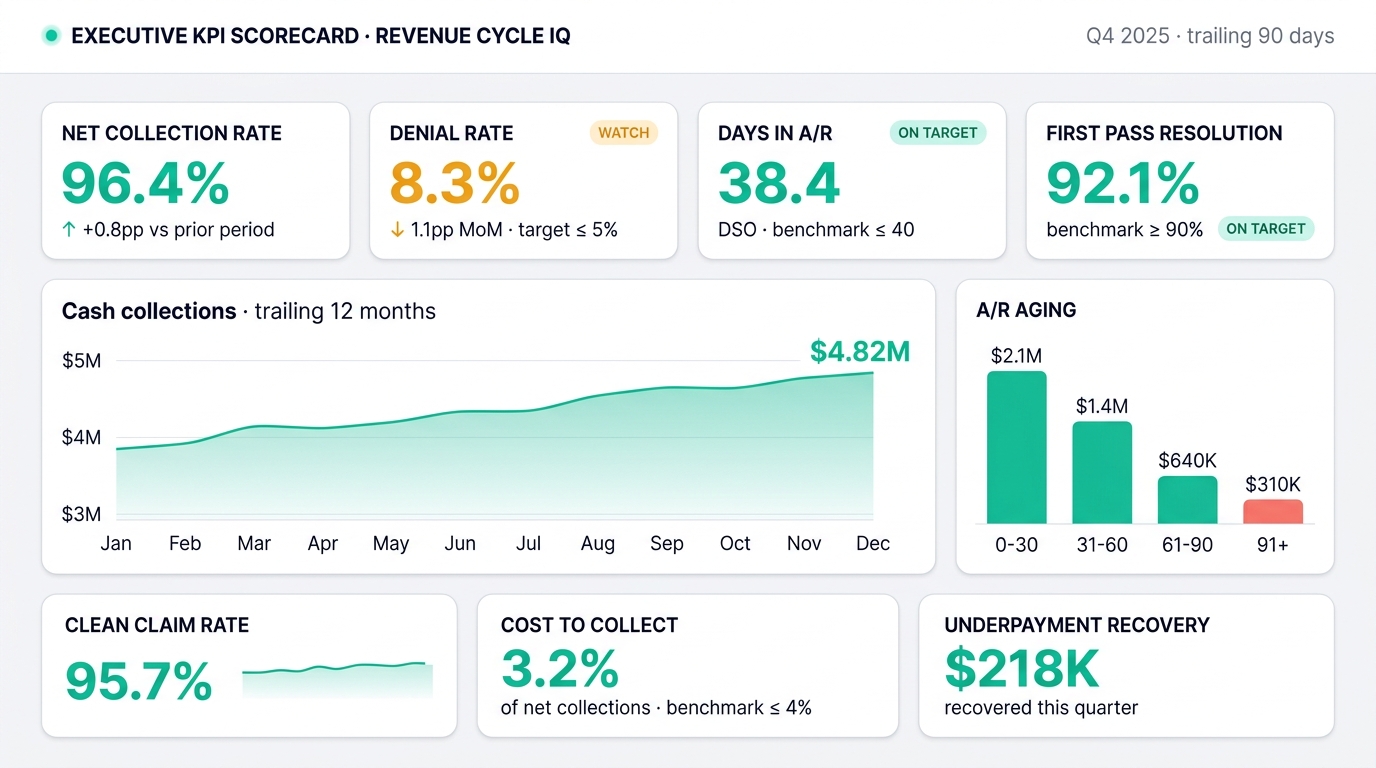
The Most Important KPIs Every Revenue Cycle Leader Should Monitor
You cannot improve what you do not measure. The 10 KPIs every revenue cycle leader should monitor — and the questions each one answers.

The Executive Revenue Cycle Dashboard Every CFO Needs
Most executive dashboards measure activity. A small set of outcome metrics tells you, every Monday morning, where to focus the week. Here is the layout that works.
Ready to Improve Revenue Cycle Performance?
Explore Revenue Cycle IQ's consulting services, analytics solutions, and executive intelligence tools designed to help healthcare organizations improve financial outcomes.